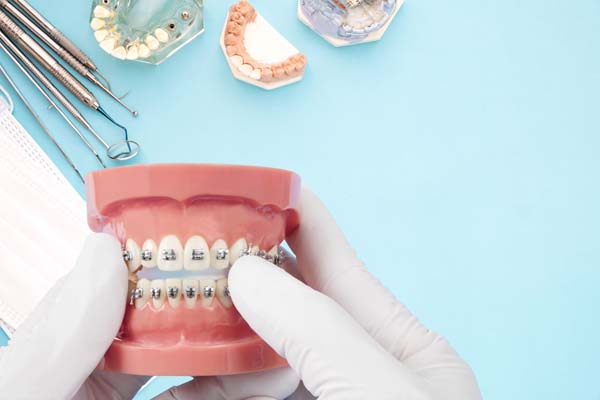
Braces have been used for orthodontics for over a century. They move teeth by applying force on them, slowly pushing them to a better alignment. Braces are made up of brackets that are attached to each tooth and wires that connect all the brackets on a dental arch. Increasing tension in these wires increases the force being applied to the patient’s teeth. Pushing teeth to a better alignment is the idea that powers orthodontics.
About braces
Braces are highly recommended by dentists when it comes to fixing severe bite issues. Treatment times are typically somewhere between one to three years. Braces are easily noticed when worn, however, and that makes some people reluctant to straighten their teeth with them.
Fortunately, more aesthetically pleasing options like ceramic braces have been developed. Ceramic braces have similar parts as metal braces, but the metallic components are replaced with transparent and tooth-colored parts. As a result, it is harder to notice them on teeth.
Pros and cons of orthodontics with braces
Most people think of braces when orthodontics is mentioned. The benefits of straightening teeth with braces include:
- Traditional braces can be used to treat a wider range of orthodontic issues than clear aligners, such as problems caused by a person’s jaw being improperly positioned
- Braces tend to lead to better outcomes compared to clear aligners
- Braces are typically more affordable than clear aligners
- Braces work 24/7, and that can lead to shorter treatment times
- Braces being non-removable can be a plus for the parents of children who need orthodontic treatment
- There is no way that a person can lose their braces
- Braces are more effective at straightening children’s teeth
- Ceramic braces provide decent aesthetics
- Braces are sturdier than clear aligners
However, there are downsides to fixing bite issues with braces. The most common ones include:
- Metal braces can ruin a person's smile
- People who wear braces often must avoid foods that need to be bitten into, like apples or corn, since this can lead to food particles getting stuck underneath the appliance or cause damage
- Braces being non-removable makes it harder to clean teeth and eat during treatment
- Treatment with braces typically requires monthly visits to a dentist
- Braces are more challenging to clean than clear aligners
Braces can get you a straight smile
Braces might not be the most aesthetically pleasing oral appliances used to straighten teeth, but they get the job done. Call or visit our Englewood clinic to learn more about how oral appliances like braces can be used to fix problems with your bite.
Request an appointment here: https://www.desalvodental.com or call DeSalvo Dental at (201) 244-7658 for an appointment in our Englewood office.
Check out what others are saying about our dental services on Yelp: Orthodontics in Englewood, NJ.
Recent Posts
Many patients brush their teeth twice a day yet still deal with plaque buildup, gum irritation, or lingering bad breath. A general dentist often finds that the issue is not a lack of effort but rather a toothbrush that no longer cleans effectively. Bristles wear down gradually, so it can be difficult to notice when…
If you are wondering what type of dentures are right for you, now may be a good time to consider acrylic dentures. Acrylic dentures are made from 100 percent acrylic and unlike other types of dentures, they do not have any metal substructures to offer support. The dentures are ideal for permanent and temporary denture…
For optimal oral health, it is a general rule of thumb to receive professional teeth cleaning every six months. Some patients need even more frequent cleanings to maintain a healthy smile. Knowing the reasons why this would be necessary can help you make informed oral health decisions.Professional teeth cleaning is a foundational element of preventive…
A strong relationship with a family dentist gives households a trusted partner in oral health. With regular visits, clear guidance, and practical tips, families learn how to protect their smiles through each stage of life. For instance, daily brushing and flossing, thoughtful food choices, and consistent professional care work together to reduce the risk of…